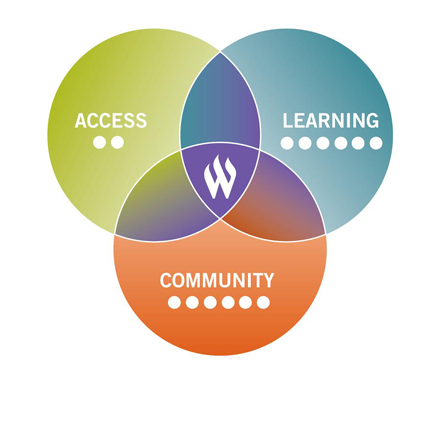

Weber State University's mission is a broad statement of the goals and priorities of the university. The mission aligns with the Board of Regents' classification of the institution and aligns to divisional and unit goals and priorities.

Weber State University Accreditation & Planning
Weber State University’s accreditation and planning processes are inextricably mixed.
The planning and budgeting processes are the internal ways that the university ensures that it is adaptive and sustainable in fulfilling its mission given the changes in the local, regional, national and international context.
Accreditation is the external way we demonstrate to our institutional accrediting body how well the institutional is being adaptive and sustainable in fulfilling its mission.
Key in both the accreditation and planning is the monitoring of data that address the mission directly (through measurable objectives based on the core themes) and indirectly (through divisional programs and services with outcomes that are aligned to core themes and objectives). Another key feature of planning and accreditation is to promote continual improvement.